A calm evening at home
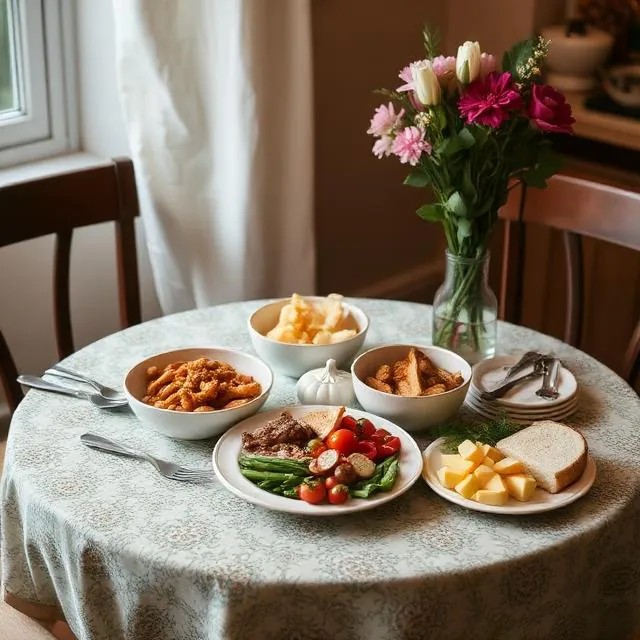
An evening in can go two ways. It can be the kind where you drift from screen to fridge to screen, half-watching, half-scrolling, and somehow arrive at bedtime feeling more frayed than when you sat down. Or it can be the kind that gently puts you back together — soft light, something warm to eat, the day set down where you can stop carrying it. The difference between the two rarely comes down to money or effort. It comes down to a few small choices made on purpose rather than by default. This is a look at how to give an ordinary night in the shape of a proper rest, without turning it into yet another routine to get right.
Start by changing the light
The fastest way to tell a room, and yourself, that the day is winding down is to change the light. Bright overhead bulbs keep you in daytime mode long after the sun has gone. As the evening settles, switch them off and let lamps take over — warmer, lower, pooled in the corners rather than flooding the ceiling. A room lit softly feels immediately calmer, and your body reads the dimmer light as a signal to ease off. It is the single easiest change, and it costs nothing but the flick of a switch.
Warmth you can feel
Cosiness is partly physical. A warm room, a blanket within reach, thick socks, a hot drink cupped in both hands — these small comforts do real work. When your body is warm and settled, your mind tends to follow. In winter especially, leaning into warmth turns a plain evening into something that feels like shelter from the dark outside.
A gentle supper, not a heavy one
What you eat in the evening shapes how the night goes. A very heavy, very late meal can sit uncomfortably and make settling harder. A gentle supper — warm, simple, not enormous — leaves you comfortable rather than stuffed. This is the natural home of a slow, seasonal plate: a bowl of soup, roasted vegetables, something you cooked without rushing. The cooking itself can be part of the calm if you let it be, a quiet task for the hands while the day unwinds.
- Keep it warm and simple. Comfort food in the truest sense — nothing you have to fight to make or to finish.
- Eat a little earlier if you can. Giving the meal time to settle before bed helps the evening feel unhurried.
- Sit down to it properly. Even a plain supper feels like more when you eat it at the table rather than over the sink.
- Let it be enough. A calm evening is not the night to graze endlessly; one good, warm meal is the anchor.
A restful night in is not about doing more. It is about putting the day down and letting the room hold you for a while.
Putting the day down
The hardest part of an evening at home is often mental. The body has stopped, but the mind keeps working through the day's loose ends. It helps to have a small, deliberate way of setting it aside. For some people that is a few lines in a notebook — tomorrow's tasks written down so the head no longer has to hold them. For others it is a slow cup of tea, a bath, a chapter of a book, or simply putting the phone to charge in another room so the endless scroll cannot follow you to the sofa. The exact ritual matters less than having one.
Let it be a little dull, on purpose
A truly restful evening is often a slightly boring one, and that is the point. Constant stimulation — bright screens, fast content, one more episode — keeps the mind revved when it wants to idle. Choosing something quieter, something that does not demand much of you, gives the day a soft ending. Boredom, in small doses, is where rest actually lives.
An ending that repeats
The last piece is a familiar close. When the same few steps happen most nights — lights low, a warm drink, teeth, a page or two — the body learns that this sequence means sleep is coming. It stops being a decision and becomes a habit that carries you gently toward bed. This is exactly where a calm evening hands over to good sleep through the seasons: the soft landing you have built becomes the runway for the night. Keep it simple, keep it warm, and let the ordinary evening become the restful one.
← Back to all reads